

Frequent messages, thoughtful favours and private jokes can make a friendship feel close. They do not establish whether someone wants to date you. The same behaviour can express friendship, attraction, habit or a mix of feelings.
Before gathering more “signs,” ask what you want and what you would feel comfortable discussing. These common situations offer places to seek clarity, rather than a scorecard for deciding what another person secretly feels.
On this page
- Frequent messages: agree on a comfortable pace
- Physical closeness: check comfort rather than assume
- Private conversations: respect what stays personal
- Questions about dating: answer only what you want to share
- Compliments: receive them without keeping a score
- Remembered events: appreciate care in its own right
- Flirty jokes: ask once instead of guessing repeatedly
- Favours: keep honesty and choice in the picture
- Support: notice whether your choices are respected
- Partner comparisons: avoid turning care into a contest
- Inside jokes: let shared history be shared history
- Shared interests: keep account privacy separate
- Idealising each other: leave room to be ordinary
- The word friendship: take an answer seriously
- Making plans: ask clearly and leave room for no
Frequent messages: agree on a comfortable pace
A good-morning text can be affectionate without being a romantic invitation. Look at the wider relationship and any words you have actually exchanged. If the frequency is welcome, you can enjoy it; if it feels demanding, say when you are available. You do not need to reply constantly to preserve a close friendship.
Physical closeness: check comfort rather than assume
Sitting close or resting against someone can mean different things to each person. Ask whether contact is comfortable, and speak up if you would like more space. Past closeness does not create permission for a new kind of touch. A useful question is “Is this okay?” rather than trying to infer consent from someone staying still.
Private conversations: respect what stays personal
A friend may discuss their sex life, avoid the topic or feel awkward for many reasons. None of these choices settles the question of attraction. Let each person decide what to share. Do not push for intimate details as a test, and do not pass on information you were trusted to keep private.
Questions about dating: answer only what you want to share
Someone asking about your dating life may be curious, supportive or interested in you. You can answer briefly or ask why they are wondering. If you want to discuss dating each other, move toward that question directly. Using another person’s jealousy or discomfort to test their feelings creates more uncertainty rather than a clear agreement.
Compliments: receive them without keeping a score
Being called funny, attractive or someone’s favourite person can feel meaningful. Pay attention to whether the compliment is welcome and respectful, rather than counting superlatives as evidence. If comments become too personal, you can say so. Gratitude for a kind remark does not commit you to returning a romantic feeling.
Remembered events: appreciate care in its own right
A friend remembering an interview or difficult anniversary is offering attention. You can appreciate that without assigning a romantic motive. If you hope there is more between you, take your own wish seriously, but keep it distinct from what they have told you. Thoughtfulness deserves recognition without becoming a promise the other person never made.
Flirty jokes: ask once instead of guessing repeatedly
If a joke about dating leaves you unsure, try “Was that just a joke, or would you like to talk about going on a date?” A calm question gives them room to clarify. If the joking makes you uncomfortable, ask for it to stop. You do not have to laugh along to protect the friendship.
Favours: keep honesty and choice in the picture
Helping with a task can be a generous part of friendship. Helping you deceive someone is a different issue and does not demonstrate romantic commitment. You can decline an excuse, a secret or a favour that crosses your values. Neither person should treat help as a debt that must be repaid with attention, affection or a date.
Support: notice whether your choices are respected
Support leaves you room to decide. A friend can express concern about a relationship without insisting you choose them instead. If advice becomes pressure, name the boundary: “I hear your concern, but this decision is mine.” Where you are worried about controlling behaviour, seek an independent perspective as well as this friend’s opinion.
Partner comparisons: avoid turning care into a contest
A friend may offer help that a partner does not, but different roles and circumstances make comparisons incomplete. Address what is missing in the relationship concerned. If either of you already has a partner, discuss the agreements and boundaries that apply rather than assuming closeness gives permission for secrecy or an affair.
Inside jokes: let shared history be shared history
Remembering a small habit or making a private joke can reflect familiarity. Enjoy it if it is kind; challenge it if you feel mocked or exposed. You do not need to decide whether every shared reference is a coded message. Clear words offer a firmer basis for planning a date than interpreting an old joke.
Shared interests: keep account privacy separate
Liking the same programme, music or hobby can give you something enjoyable to do together. It does not require sharing passwords or giving access to personal accounts. Agree on the activity itself: “Would you like to watch this together on Friday?” If you mean a date, say that rather than relying on the setting to explain it.
Idealising each other: leave room to be ordinary
It can feel good when someone sees your strengths, especially when you doubt yourself. You still need room for mistakes, disagreements and limits. If being “perfect” starts to feel like an expectation, name the pressure. A possible romance should not depend on either person maintaining an image they cannot comfortably live up to.
The word friendship: take an answer seriously
When someone says they see you as a friend, accept that as their current answer. Do not treat kindness afterward as evidence that you should ask repeatedly. You can take space to settle your own feelings. For help thinking through your side of the situation, read about romantic feelings for a friend.
Making plans: ask clearly and leave room for no
If you want to date and feel comfortable asking, make one clear invitation: “I would be interested in going on a date with you. Would you like that? It is okay if you would rather stay friends.” Choose a moment without an audience or an obligation to respond immediately.
If they agree, decide on a simple plan. If they decline or remain unclear, avoid bargaining or seeking more clues. You can respect their answer and decide what contact is comfortable for you. This guide to keeping a connection warm without games offers ideas for communication that leaves both people free to choose.
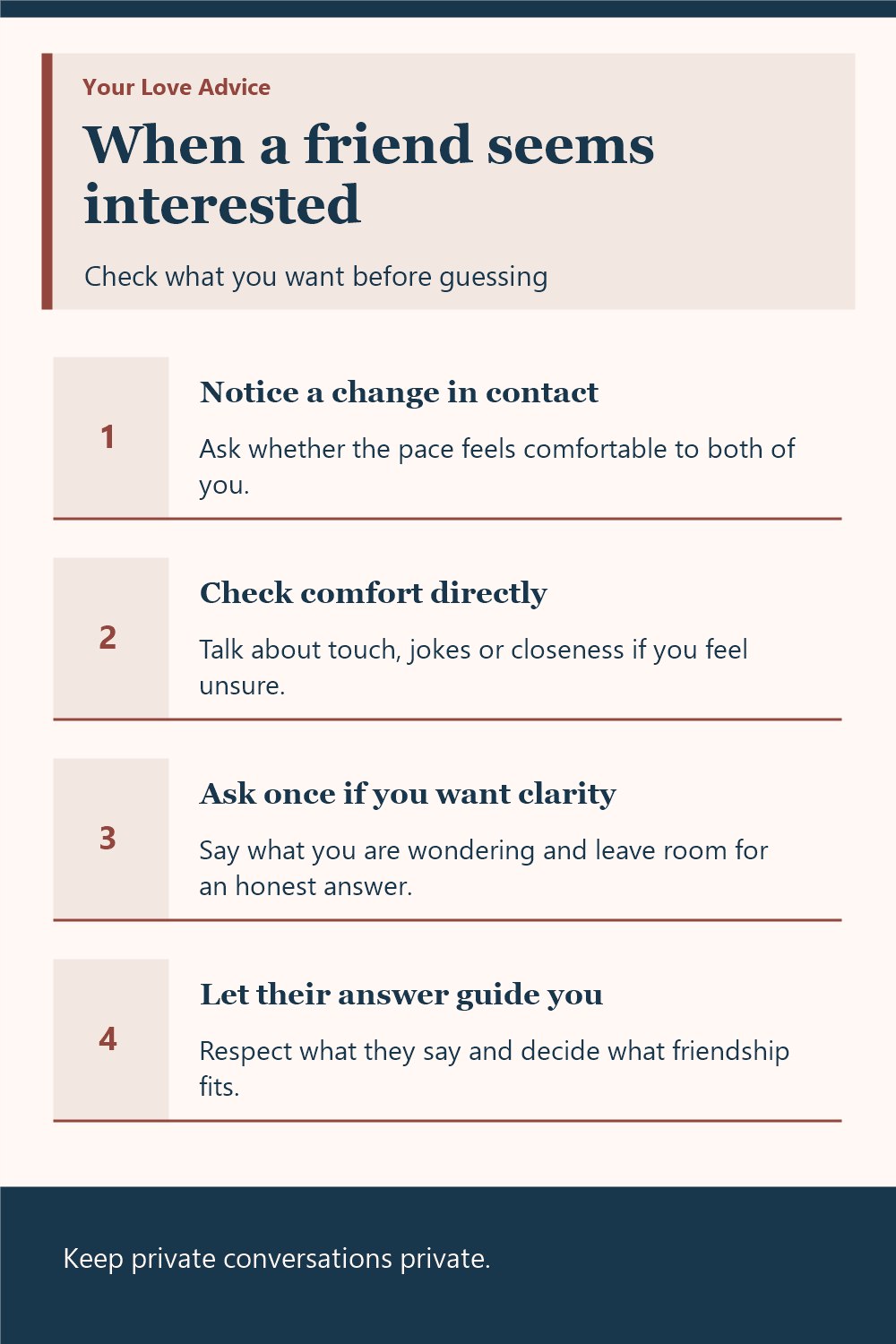
Read the infographic in text
When a friend seems interested Check what you want before guessing
- Notice a change in contact Ask whether the pace feels comfortable to both of you.
- Check comfort directly Talk about touch, jokes or closeness if you feel unsure.
- Ask once if you want clarity Say what you are wondering and leave room for an honest answer.
- Let their answer guide you Respect what they say and decide what friendship fits.
Keep private conversations private.