

When someone you care about stops replying without explaining, you can be left with both a loss and an unanswered question. You may miss the person, wonder whether the connection has ended or keep checking for a message. Those feelings deserve care even if you never learn why the contact stopped.
Silence gives you limited information. It does not establish the other person’s motives, your worth or what every future relationship will be like. You can make a decision about contact using what is happening now, without first finding an explanation that settles every doubt.
In this article
Describe the situation without filling in every gap
Notice what has actually changed: messages unanswered, plans not confirmed or a pattern of contact ending abruptly. The meaning depends partly on the connection and your usual arrangements. One delayed reply is different from sustained silence after regular contact. There is no single number of hours that proves ghosting.
Write down what you know and what remains unknown. “We had plans, and they have not replied” is an observation. “They never cared” is an interpretation you may not be able to verify. Keeping that distinction does not excuse the effect on you; it gives you a clearer basis for your next choice.
If there is a concrete reason to think someone may be in immediate danger, use appropriate local help. Repeated messages, online investigation or turning up at their home are not a reliable way to obtain reassurance about an ordinary unanswered conversation.
Decide whether one clear message would help
If it feels safe and no request to stop contact has been made, you might send a brief message: “I haven’t heard from you and don’t know whether our plans still stand. Please let me know if you want to continue seeing each other. I won’t keep following up.” Use wording that fits what you actually want.
You can also choose not to send anything further, particularly if you have already asked clearly. A final message is an option, not a requirement for closure. Avoid bargaining, threats or promises to change yourself in return for a reply.
If someone has asked for no contact or blocked you, respect that limit. Do not use a different account, recruit friends to persuade them or bypass the block. A person may end contact for safety or other reasons you do not know. You can acknowledge your hurt without treating access to them as something you can demand.
Choose a limit for waiting and checking
Decide what you will do if there is no answer. For example, you might release an unconfirmed evening plan and arrange something else. A limit is about your own actions; it does not need to be an ultimatum designed to force a response.
Consider whether notifications, message rereading or profile checking are keeping you caught in the same question. You could mute an update, archive a conversation or ask a friend not to send you news about the person. Choose what helps you manage contact rather than a rule about how quickly you should feel better.
You may still hope for a reply after deciding to stop waiting. Feelings and practical decisions do not always change together. You can make plans for your own day while allowing disappointment to be present.
Separate practical matters from emotional answers
Belongings, shared commitments or an essential arrangement may need a different approach from a conversation about the relationship. Keep a necessary request specific: what needs returning, which deadline matters and a suitable way to respond. Avoid using the task to reopen a conversation the person has declined.
If you share parenting, housing or other significant responsibilities, seek relevant professional guidance about the arrangements that apply to you. A general dating article cannot resolve those obligations. You can obtain practical support without waiting for an emotional explanation.
Tell mutual friends what you need without asking them to take sides or collect private information. You might say: “I don’t want updates about their dating life. Please include me in the usual group plans.” Share your own experience while protecting details that belong to someone else.
Care for yourself and consider any return
Make room for ordinary support: company, rest, meals and activities you can manage. You do not have to find a lesson immediately or begin dating again to prove that you have moved on. If distress is persistent or disrupting daily life, seek appropriate support.
If the person returns, you can decide whether you want a conversation. Consider what they explain, whether they acknowledge the effect and what contact they are actually offering now. An apology does not require you to restart the relationship. Equally, you can choose to listen without promising a particular outcome.
You may never get all the answers you wanted. Your next step can still reflect your preferences, your available support and the way you want to be treated. Someone else’s silence does not have to decide every part of what happens next.
Read the infographic in text
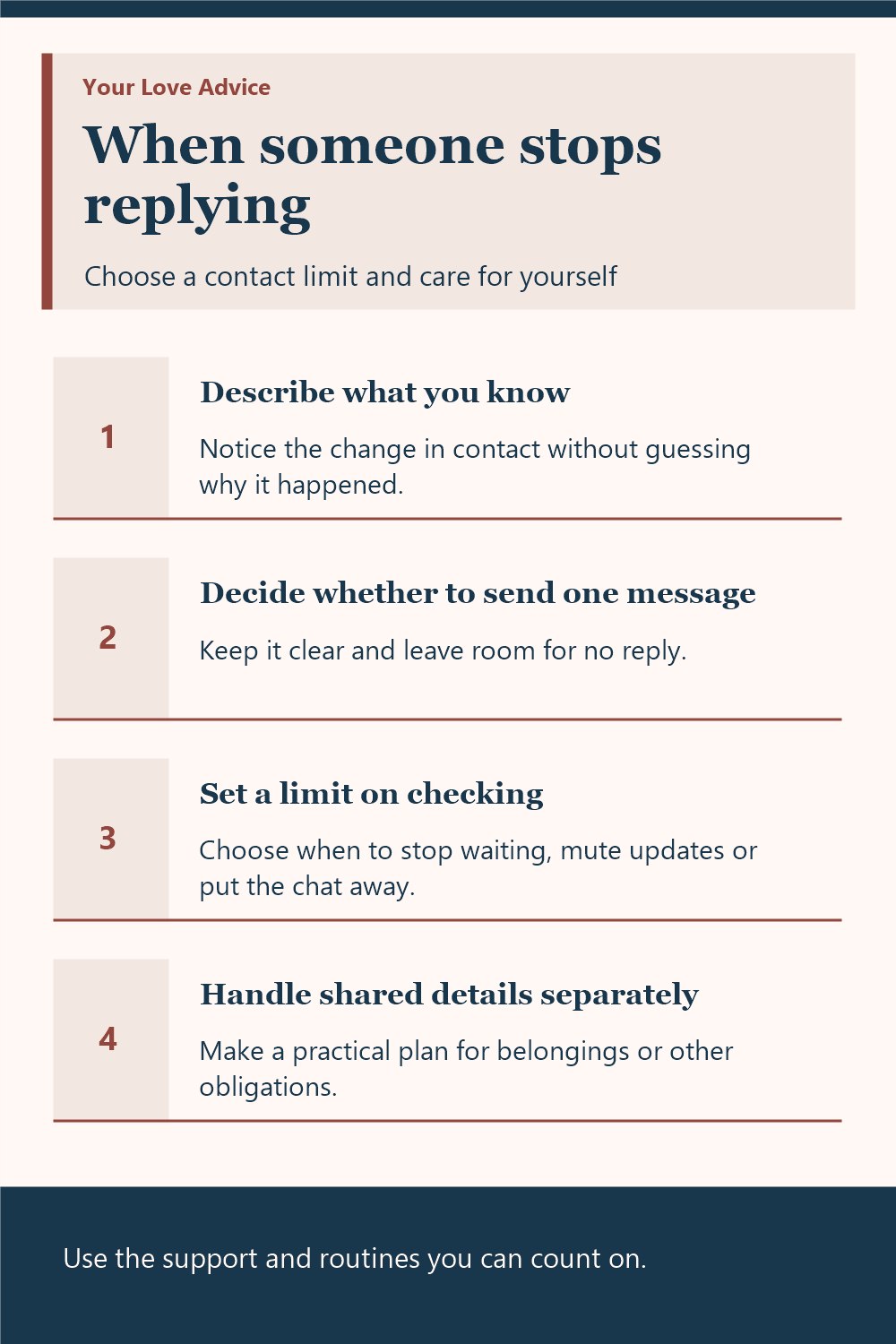
When someone stops replying
Choose a contact limit and care for yourself
- Describe what you know Notice the change in contact without guessing why it happened.
- Decide whether to send one message Keep it clear and leave room for no reply.
- Set a limit on checking Choose when to stop waiting, mute updates or put the chat away.
- Handle shared details separately Make a practical plan for belongings or other obligations.
Use the support and routines you can count on.