

“The love of my life” can be a meaningful way to describe someone you care about deeply. It cannot tell you what the future holds. A more useful starting point is the relationship you share now: how you treat one another, what each person wants and whether there is room for both of you to make choices.
The questions below are prompts for reflection, with no score to pass. You do not need a flawless partner or constant happiness to value a relationship. You also do not need to dismiss a concern because other parts of the connection feel wonderful.
On this page
- Can you disagree and still be respected?
- Is support realistic and mutual?
- Do you have a meaningful place in each other’s lives?
- Can closeness include other connections?
- Can you speak honestly about difficult things?
- Are your safety and choices respected?
- Does trust have something practical to rest on?
- What happens after disappointment?
- Can you enjoy each other without constant happiness?
- Do you both want the next step?
1. Can you disagree and still be respected?
Think about an ordinary difference: the film you want to watch, a changed plan or an opinion you do not share. Can both people explain their preferences without mockery or being made to feel foolish?
Respect includes listening, taking a refusal seriously and recognising that you remain separate people. Affection does not give anyone permission to dismiss a concern. Notice the pattern over time, including how each of you responds when the answer is inconvenient.
2. Is support realistic and mutual?
A caring partner may listen, offer practical help or ask what would be useful. They can also have limits around work, rest, health and other responsibilities. Being unavailable for one call does not settle how much someone cares.
Discuss what you can reasonably expect. “If you cannot talk tonight, could we choose another time?” creates a clearer arrangement than expecting constant availability. Look for consideration and follow-through while keeping other sources of support in your life.
3. Do you have a meaningful place in each other’s lives?
Feeling important can involve being included in a relevant decision, having plans made with you or knowing that your preferences matter. It does not require coming before every friend, relative, child or personal need.
Ask about the particular situation that leaves you unsure. Perhaps you want more notice about weekends or a clearer understanding of the relationship. A specific conversation gives both people something to respond to, without making love a competition for first place.
4. Can closeness include other connections?
You may experience your partner as a close friend as well as a romantic connection. You may also turn to a sibling, friend or someone with relevant experience about a particular concern. That does not establish that the partnership is wrong.
Consider whether you can maintain friendships, spend time independently and keep another person’s confidence. No one needs to become your only confidant or know every private thought to share a meaningful life with you.
5. Can you speak honestly about difficult things?
A peaceful relationship can still include disagreements and uncomfortable conversations. Ask whether you feel able to raise a concern, say you have changed your mind or request something different.
If it feels safe, try one clear example: “I felt left out when that decision was made without me. Can we talk about how to handle it next time?” You can seek understanding without demanding immediate agreement. A pause may help when both people can return to the subject willingly.
6. Are your safety and choices respected?
Look beyond a feeling of being protected to the way you are treated. Can you decline touch, keep private information private, see other people and make an independent decision without threats or punishment?
Fear, coercion, intimidation or monitoring deserve attention even when there is affection too. The love is respect relationship spectrum offers a guide to concerning behaviour and ways to reach confidential support. You can speak with an advocate about your situation without first deciding what label fits.
If you fear retaliation, seek individual support before attempting a confrontation or joint repair exercise. Another person’s harmful behaviour is their responsibility.
7. Does trust have something practical to rest on?
Consider the agreements you have actually made. Are changes explained? Is private information handled with care? Can someone acknowledge a mistake instead of insisting that you should trust them automatically?
Trust does not require phone searches, constant location updates or giving up privacy. When you are uncertain, identify the concern and what information matters to your decision. A reassuring promise can be meaningful while still needing time and follow-through.
8. What happens after disappointment?
People can misunderstand each other, forget a plan or respond poorly. A lasting connection cannot promise that neither person will ever feel hurt. What happens afterward matters.
Look for responsibility for the specific action and a practical effort to change it. An apology does not require you to forgive immediately or dismiss a recurring problem. You can value good intentions while deciding that repeated behaviour is not something you want to live with.
9. Can you enjoy each other without constant happiness?
Shared humour, affection and enjoyable time can matter a great deal. Leave room for quieter evenings, different moods and times when one person does not want the same activity. Nobody has to keep another person smiling all the time.
Ask what closeness each of you enjoys and what fits your current capacity. For practical examples of shared time, affection and everyday arrangements, read Everyday Relationship Care: Respect, Closeness and Shared Choices.
10. Do you both want the next step?
Talk about the future you actually want: the kind of commitment, living arrangements, family plans or pace that matters to you. Feeling strongly about someone does not establish that you want the same arrangement.
Listen to the answer available now. You can ask questions or agree to revisit a decision without treating uncertainty as a promise of eventual agreement. Want a Relationship With Him? Clarity, Commitment and Mutual Choice offers further prompts for that conversation.
You may choose to continue, slow down, seek support or step away. Choose one concern or wish to explore next. A meaningful future together leaves room for both people’s present choices.
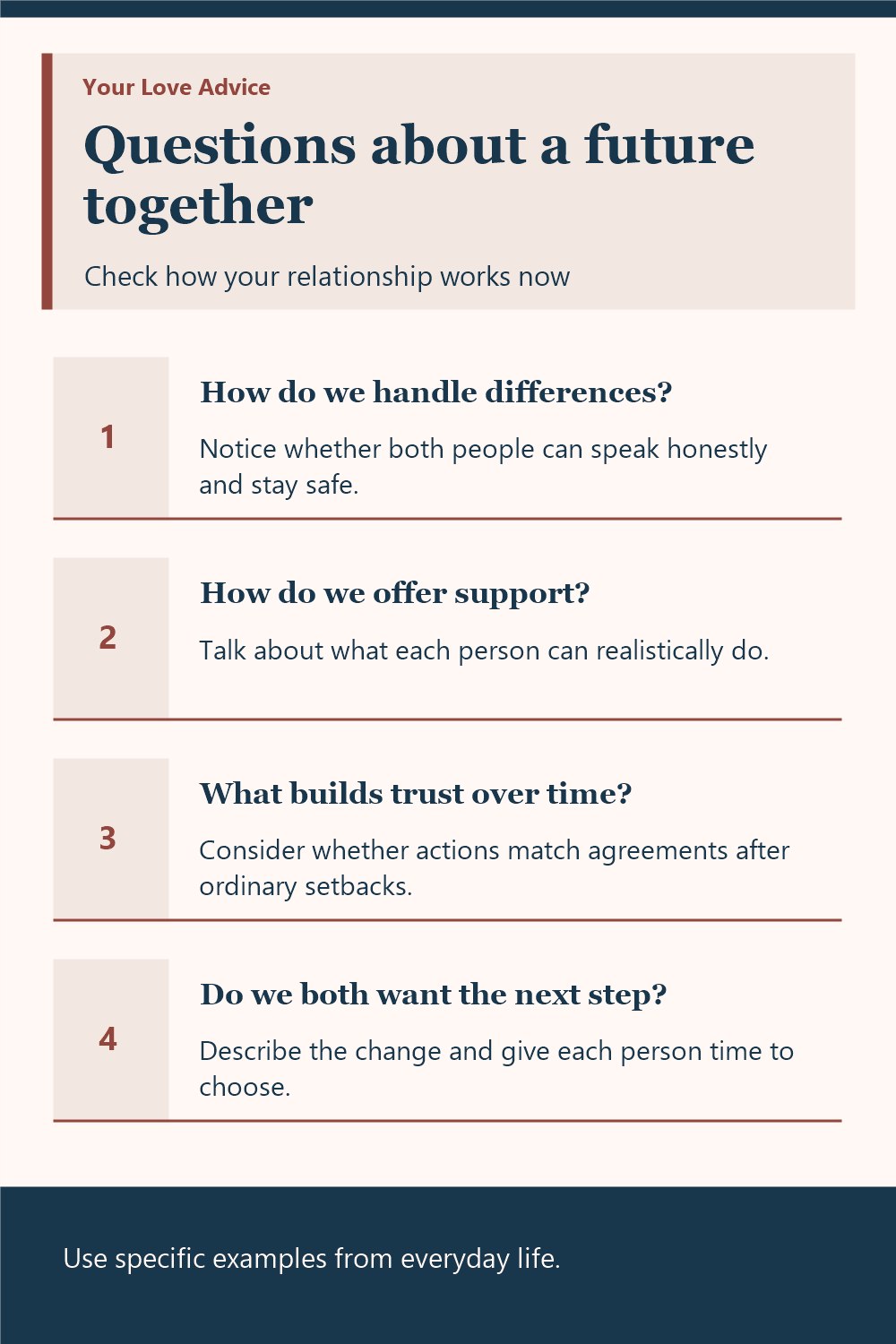
Read the infographic in text
Questions about a future together
Check how your relationship works now
- How do we handle differences? Notice whether both people can speak honestly and stay safe.
- How do we offer support? Talk about what each person can realistically do.
- What builds trust over time? Consider whether actions match agreements after ordinary setbacks.
- Do we both want the next step? Describe the change and give each person time to choose.
Use specific examples from everyday life.