

A difficult moment can leave you wondering whether your relationship needs a conversation, a practical change or a different decision. Begin with the behaviour affecting you and the choices available, rather than trying to decide what every silence or disagreement secretly means.
Different preferences, repeated broken agreements and intimidation call for different responses. You can ask for what you need, notice whether change follows and seek support. You do not have to prove that a relationship meets a particular label before taking a concern seriously.
On this page
Communication: ask about the pattern that concerns you
Quietness can have many explanations. Someone may be tired, unsure how to begin or need a different way to communicate. If contact has changed, ask about that change directly: “We have had less time to talk recently. What is manageable, and when could we discuss how we are doing?”
Try choosing a time, a written exchange or a shorter conversation that gives both people room to respond. Explain the practical effect on you. For example, not knowing whether a plan is happening may leave you unable to organise your evening.
Pay attention to whether concerns can be raised without ridicule or punishment. A person can ask for time to think and still take your concern seriously. Repeatedly refusing every workable discussion may leave you without the kind of partnership you want, whatever the person’s private reason.
Trust: consider facts, agreements and privacy together
If an agreement was broken, be specific about what happened and what information affects your next choice. Ask what the other person acknowledges and what would change. A promise to try harder becomes easier to assess when it names an action and is followed through.
Privacy remains important. Looking through a phone, demanding passwords or following someone does not create a clear relationship agreement. Talk about contact and expectations openly when it is safe to do so, and decide what arrangement you can accept.
You may need time or outside support after trust has been damaged. You can choose whether to continue without forcing immediate forgiveness. You also do not have to stay indefinitely while waiting to feel certain.
Abuse: put safety ahead of a routine relationship conversation
Threats, intimidation, sexual pressure, stalking and control over access to money or other people are serious concerns. The National Domestic Violence Hotline’s warning-signs guide describes behaviours that can be abusive. Harm does not have to be physical to deserve support.
If you fear retaliation, do not assume that confronting the person or announcing a breakup will be safe. A domestic abuse organisation can help you consider your circumstances and a personalised safety plan. You can seek help while deciding what to do, while staying or after leaving.
The Hotline’s guide to preparing to leave explains why planning and individual support matter. It is a US service; outside the US, look for a local domestic abuse organisation. If you are in immediate danger, contact your local emergency service when you can do so safely.
If you worry that your device or browsing is monitored, consider how to seek support in a way that fits your safety. You do not owe a joint conversation, a private disclosure or an in-person meeting that puts you at risk.
Control: notice whether each person remains free to choose
Ask whether you can keep friendships, express a different opinion, decline contact and make personal decisions. An agreed check-in differs from a demand to account for every movement. Care should leave room for privacy and an honest no.
A partner may feel disappointed when you choose something different. Notice what happens next: can the difference be discussed, or do you face threats, humiliation or pressure until you give in? Occasional affection does not erase a controlling pattern.
Apply the same respect to the other person’s choices. You can explain your wishes and decide whether a relationship fits; you cannot require someone to abandon their wider life as proof of love. If the pattern feels unsafe, return to individual specialist support rather than trying to negotiate it alone.
Capacity: discuss responsibilities without shaming either person
Work, health, disability, caring responsibilities or substance-use problems can affect daily arrangements. Focus on the actual responsibilities, their effect and what support may be needed. A person’s employment or health situation alone does not establish how much they respect you.
Be honest about what you can offer and what is becoming unmanageable. You might need a clearer division of tasks, more reliable notice or help from an appropriate professional or community service. Caring does not make you responsible for solving every problem another person faces.
Consider whether both people can discuss the situation, take relevant responsibility and respect limits. You can recognise someone’s difficulties while deciding that the current arrangement does not work for you. Your needs belong in that decision too.
Choose the next step that fits the concern: one specific request, a review of a repeated pattern or support about safety. Judge the relationship through what you experience and what changes, with room to make your own decision.
Read the infographic in text
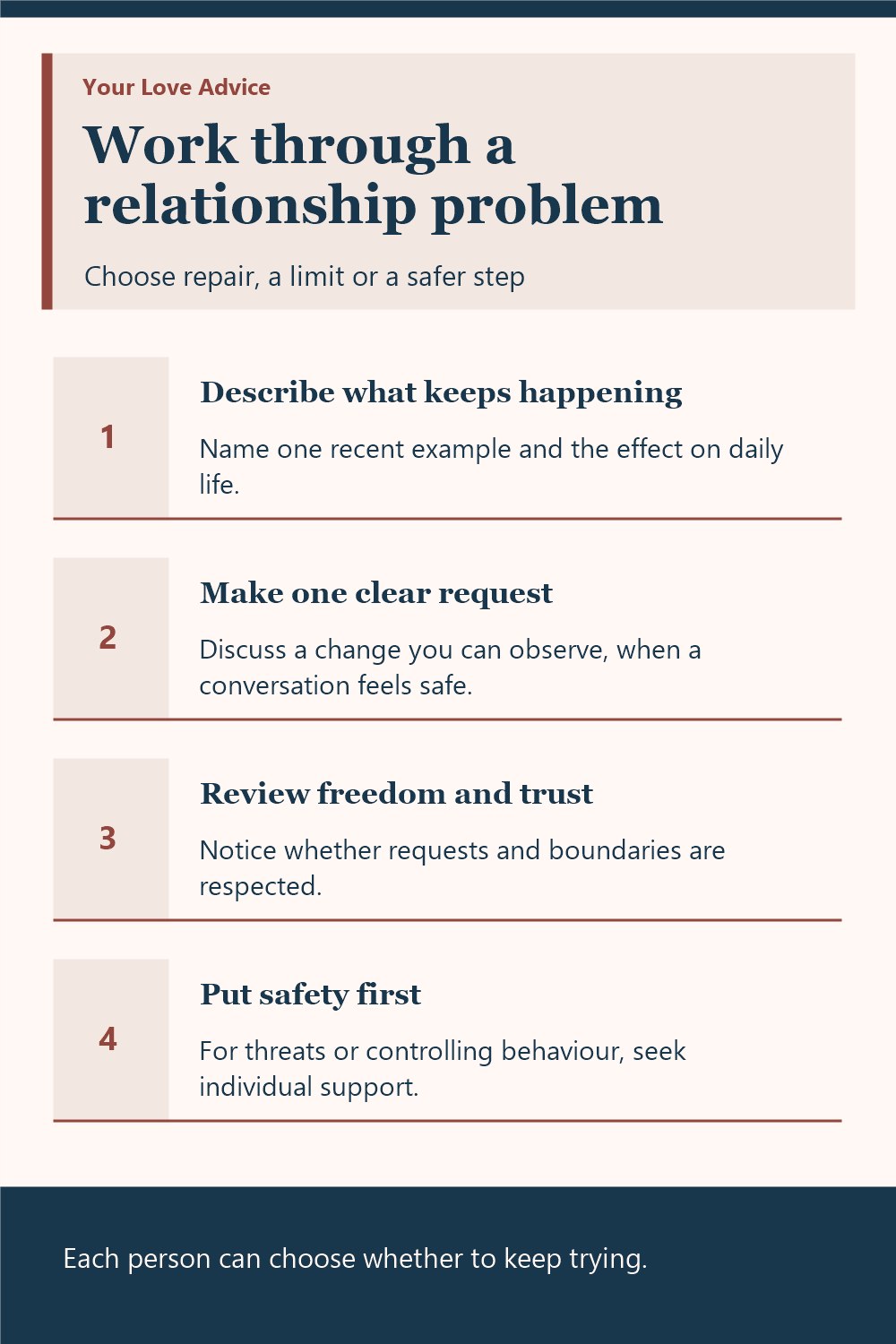
Work through a relationship problem Choose repair, a limit or a safer step
- Describe what keeps happening Name one recent example and the effect on daily life.
- Make one clear request Discuss a change you can observe, when a conversation feels safe.
- Review freedom and trust Notice whether requests and boundaries are respected.
- Put safety first For threats or controlling behaviour, seek individual support.
Each person can choose whether to keep trying.