

After heartbreak, you may want to understand what happened and what you would choose differently. You may also need rest, company or help with the practical changes. There is no requirement to turn a painful relationship into a lesson before you can receive support.
Reflection can be useful when it helps you recognise a need, a limit or a next step. Approach it at a pace you can manage. You can take responsibility for your own actions without treating another person’s mistreatment as something you caused by caring or staying.
On this page
Begin with the support you need now
Ask what would make the next part of the day more manageable. That might be a meal, company for an errand, help with a task or a quiet evening. An ordinary need deserves attention even when you do not yet understand the breakup.
Make a request that someone can answer: “Could you sit with me for a while?” or “Can we do something that has nothing to do with dating?” A trusted person can explain what they can offer. You do not have to give everyone a detailed account of the relationship.
If you have been offering more care than you can maintain, consider one adjustment. You might pause late-night calls, decline a favour or arrange time for yourself. This can be a practical change rather than a judgment that generosity was a mistake.

Reflect on specific patterns rather than your worth
If reflection feels useful, describe an event, what you needed and what happened when you raised it. “Plans changed without notice, and my request for a check-in was dismissed” gives you something concrete to consider. “I always ruin relationships” turns many experiences into a verdict about you.
Uneasiness is worth noticing, but you do not have to treat a feeling as infallible proof of someone’s intentions. Put it alongside what you observed, what was said and how you were treated. You can pause or step away without proving that another person secretly meant harm.
If writing helps and you can keep it safely, make a short note of what you valued and what hurt. You can also reflect with a trusted person or choose not to make a record. Stop when the exercise becomes another way to replay every conversation or criticise yourself.
Responsibility for abusive behaviour belongs to the person choosing it. Missing someone, overlooking a concern or finding it difficult to leave does not make you responsible for their threats, control or cruelty. If you feel frightened or monitored, seek specialist support that takes your circumstances seriously.
Notice the forms of care you can count on
Think about people who respect your wishes and follow through in ordinary ways. A friend may listen, a relative may help with a practical task or a community activity may offer company. Different connections can meet different needs.
Appreciating support does not create a duty to return romantic interest. Nor do you need to date someone because they were kind during a difficult time. You can be grateful and clear about the relationship you want.
Try naming one quality you would like to experience more often, such as being able to disagree without insults or make plans that are confirmed. This gives future reflection a direction while leaving room to get to know people as individuals.
Give your feelings room without a deadline
The end of a relationship can involve loss as well as relief. Feelings may change from one day to another. Being upset again after a better afternoon does not mean you have failed or lost all progress.
The NHS guidance on grief and loss includes relationship endings and explains that people respond differently. It also describes sources of support when coping becomes difficult. You do not need to follow a fixed sequence of feelings.
You can care for yourself while still feeling sad, angry or uncertain. Choose a manageable routine or some company rather than waiting until you feel completely ready. If distress is persistent, intense or interfering with everyday life, a qualified professional can help you consider suitable support.
New friendship or dating is a choice, not a test of whether you have healed. If you meet someone, communicate your wishes and limits honestly. You do not have to become free of every difficult feeling to deserve respectful connection.
Turn one observation into a choice you can use
Choose a small action connected to what you have noticed. If unclear plans left you waiting, you might ask for confirmation before setting aside an evening. If you neglected friendships, you could arrange a catch-up that you genuinely want.
Keep the action within your control. You can make a request, say what you can offer and decide whether an arrangement works for you. You cannot make another person become reliable or return your feelings by finding the perfect wording.
Reflection can also lead to “I do not want to make a dating decision today.” You may need time for work, health, housing or family responsibilities. Give those realities space rather than turning the breakup into an urgent project to improve yourself.
Take forward what is useful and leave room for what remains uncertain. Your pain does not need to produce a polished success story for your next needs and choices to matter.
Read the infographic in text
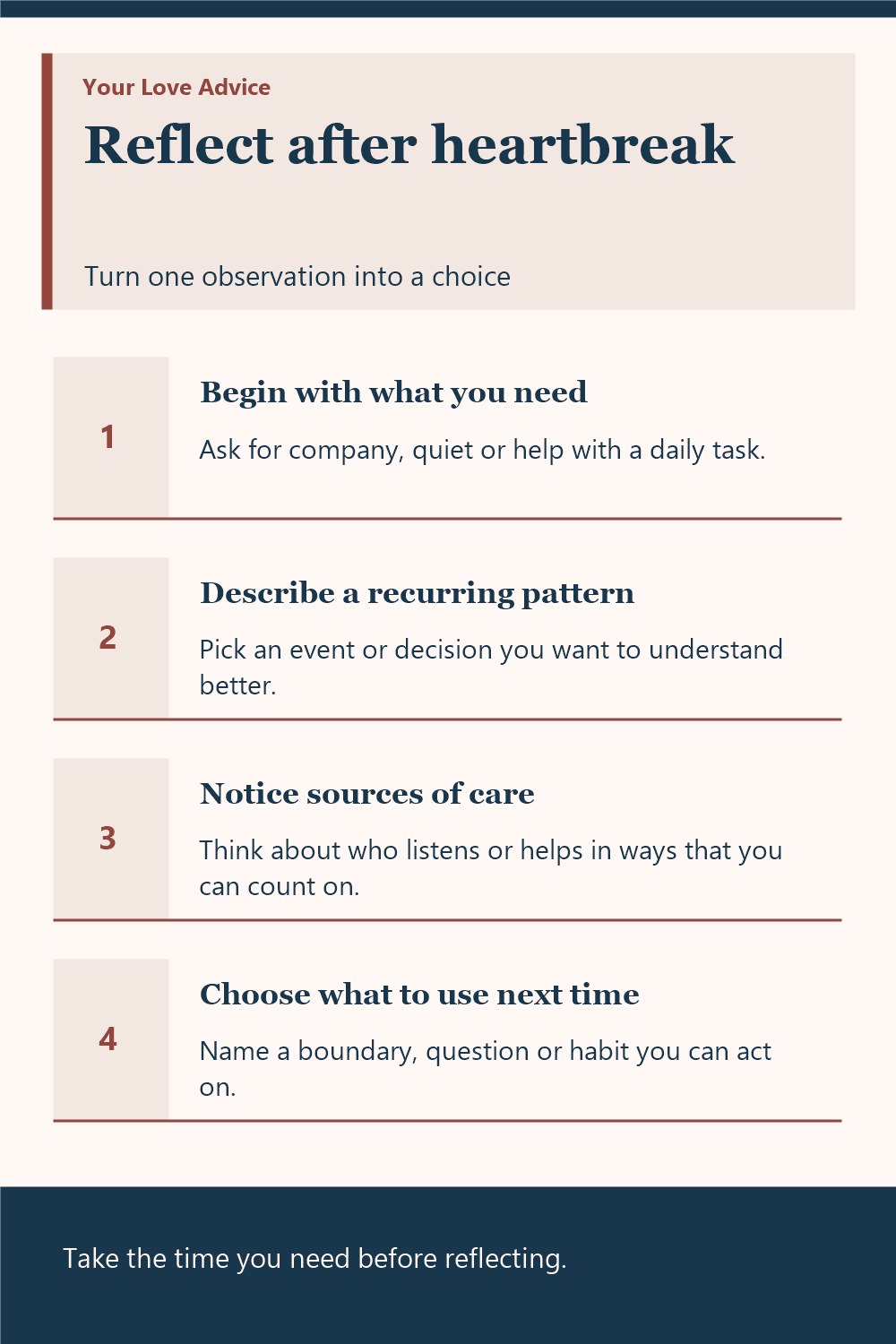
Reflect after heartbreak Turn one observation into a choice
- Begin with what you need Ask for company, quiet or help with a daily task.
- Describe a recurring pattern Pick an event or decision you want to understand better.
- Notice sources of care Think about who listens or helps in ways that you can count on.
- Choose what to use next time Name a boundary, question or habit you can act on.
Take the time you need before reflecting.