

Online dating gives you limited information about someone at first. A delayed reply, awkward wording or a private profile does not prove that they are dishonest. Pay more attention to what they ask you to do and how they respond when you decline.
You can pause or end contact without proving that someone is dangerous. These eleven checks focus on choices and behaviour rather than insults, gender stereotypes or a promise that any checklist can guarantee safety.
On this page
- Unclear intentions and plans
- Pressure to meet privately before you are comfortable
- Disrespect when you answer or slow down
- Intrusive contact across your accounts
- Requests for money, gifts or investments
- Questions that expose private details
- Repeated cancellations without a workable alternative
- Pressure to leave the app or send intimate images
- Too much confidence in a photo or badge
- Important details that remain inconsistent
- Urgent travel stories that become a payment request
Unclear intentions and plans
If you want to meet or date and the other person only wants occasional conversation, ask about the difference. “I am interested in arranging a date. Is that something you want?” gives them a clear question.
A mismatch is not automatically a scam. You can still decide that the contact is not what you are looking for and stop setting time aside for an uncertain plan.
Pressure to meet privately before you are comfortable
You can decline an invitation to your home or theirs and suggest a public place when you feel ready to meet. Keep control of arrangements that matter to you, including how you travel and when you leave.
Notice a response that dismisses your preference, insists you owe them a visit or changes the plan without agreement. You do not have to attend a meeting to demonstrate trust.
Disrespect when you answer or slow down
People have different schedules and ways of communicating. A slow response does not establish that someone is weak, uninterested or untrustworthy.
Focus instead on insults, ridicule or repeated demands after you have stated what contact works for you. You can say you do not want to continue, or stop responding if an explanation would invite more pressure. You are not responsible for finding perfect words to make another person respectful.
Intrusive contact across your accounts
Finding a public photo is not proof that someone hacked an account. Repeated unwanted contact or demands for access deserve attention. Keep passwords and verification codes private.
If you feel monitored or threatened, seek private support for a safety plan before making changes that could alert the person.
Requests for money, gifts or investments
The FTC’s romance-scam guidance warns about invented emergencies and requests for money, gift cards or cryptocurrency. Do not send money or gifts to a romantic contact you have not met in person.
Be cautious of pressure to invest through a link or service they provide. Warm messages and urgent promises do not establish that a financial request is legitimate. Meeting someone does not make every later request safe either.
Questions that expose private details
You can decline questions about your full birth date, address, workplace routine, finances or children. Share only what you choose; interest does not entitle someone to private information.
A person who respects your answer gives you more room to decide what contact feels comfortable.
Repeated cancellations without a workable alternative
A cancellation can have a genuine reason, including illness, access difficulties or a change in responsibilities. It does not automatically show disrespect or deception.
If plans repeatedly fall through, ask what is realistically possible. You might agree on a different arrangement or decide not to keep scheduling. You do not need to accuse the person of a hidden motive to choose how you spend your time.
Pressure to leave the app or send intimate images
You can keep contact within an app’s available safety features and decline pressure to move elsewhere or send intimate images. Australia’s eSafety online-dating guidance explains these concerns and support options.
If threats or unwanted contact occur, consider preserving evidence where safe, reporting and appropriate support before deciding how to block contact.
Too much confidence in a photo or badge
A missing photograph can limit what you know, but it is not a reason to insult someone or assume they are married. A photograph, video conversation or profile badge also cannot tell you everything about their intentions.
You can decide that there is not enough information to continue. Avoid replacing that uncertainty with a demand for identity documents or private records that you are not equipped to safeguard.
Important details that remain inconsistent
If someone gives conflicting accounts of their availability or relationship status, ask about the detail that matters to your decision. Consider the answer alongside how the contact actually works.
An explanation does not require you to continue, and a sparse profile is not proof of cheating. If questions lead to hostility or more confusion, you can pause without trying to investigate someone through their friends, family or workplace.
Urgent travel stories that become a payment request
Travelling for work or living far away is not itself a warning sign. The FTC identifies stories about overseas work and travel costs among the explanations romance scammers use when requesting money.
If you have paid someone you now suspect is a scammer, contact your bank or payment provider promptly and ask what options are available. Report the profile to the platform; in the United States you can also report the scam to the FTC. Recovery is not guaranteed.
For more about choosing a comfortable pace and protecting privacy, see our LGBTQ+ dating guide. You do not have to keep contact going while deciding what to do next. Responsibility for deception or harm remains with the person causing it.
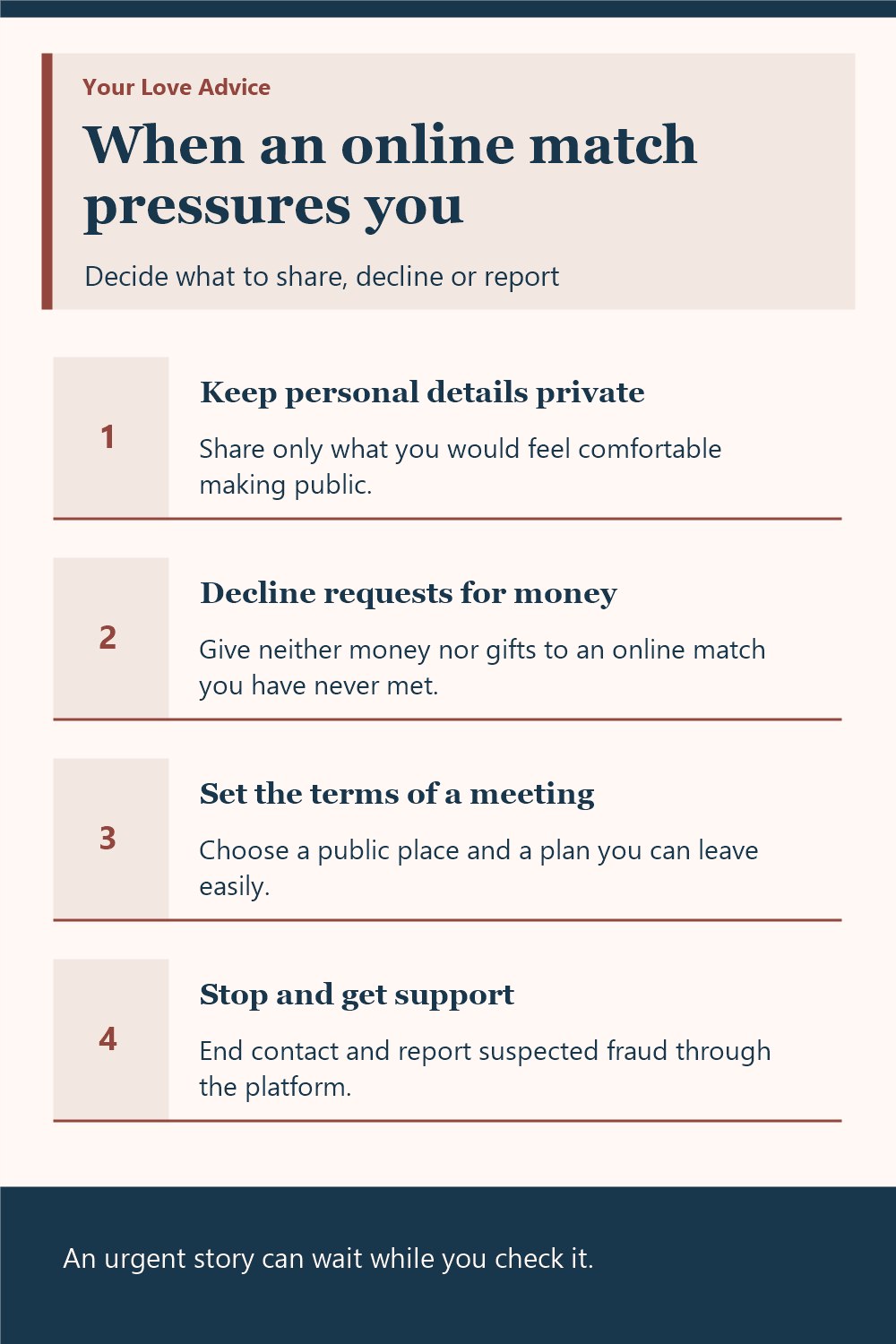
Read the infographic in text
When an online match pressures you Decide what to share, decline or report
- Keep personal details private Share only what you would feel comfortable making public.
- Decline requests for money Give neither money nor gifts to an online match you have never met.
- Set the terms of a meeting Choose a public place and a plan you can leave easily.
- Stop and get support End contact and report suspected fraud through the platform.
An urgent story can wait while you check it.