

Caring deeply about a partner does not make you responsible for meeting every need or giving up your own life. If the relationship leaves you exhausted, anxious about contact or unable to make room for yourself, look at the arrangements and actions that need attention.
Wanting affection or reassurance is something you can talk about. So are privacy, time apart and the amount of support each person can offer. The aim is to find a relationship both people freely want and can participate in, with room for your own needs as well.
On this page
Notice your needs without judging your feelings
Ask what is becoming difficult. You might be staying up for long conversations when you need sleep, cancelling plans to remain available or agreeing to favours you do not want to offer. Naming one pattern gives you a starting point for a change.
Consider what you would like instead. “I need evenings when I can rest” is easier to discuss than trying to decide whether you love someone too much. You can feel affection and still change a routine that is wearing you down.
Keep responsibility specific. Your choices about checking messages, making requests or taking on tasks are yours to consider. Your partner remains responsible for how they treat you. Their decision to be unkind, controlling or dishonest is not something your affection makes inevitable.
You do not need to prove that you are perfectly independent before receiving care. Ask whether there is room for both people’s wishes and whether each can speak honestly about the relationship available.
Respect choice and privacy in everyday contact
Discuss what contact feels comfortable during work, rest or time with other people. One person may enjoy frequent messages while another prefers a planned call. Ask what each can realistically offer instead of treating a preference as a character flaw.
Requests for passwords, constant location access or explanations for every independent activity can put pressure on someone’s choices. If you want reassurance, name the concern directly. You can ask for clarity without making access to private information a requirement of love.
Respect a clear no, a request to stop messaging or a decision to end the relationship. Finding another channel does not remove that boundary. You may need support for your own feelings, but the other person does not owe contact to make those feelings easier.
Expect the same respect for yourself. You can decline touch, an invitation or a conversation at that moment and suggest another time if you want to. If you are afraid to express a limit, seek individual support about what is happening.
Choose care you can offer freely and maintain
Before agreeing to help, ask yourself what the task involves and what else needs your time. You might be able to listen for a short while, bring a meal or handle a particular errand. A clear offer leaves the other person free to say whether it would help.
Check whether you are hoping a favour will secure affection, prevent a breakup or make an uncertain relationship definite. If commitment is the concern, have that conversation directly when it is safe. Giving more does not create an agreement that neither person has discussed.
If responsibilities are shared, talk about the whole task, including planning and follow-through. Name who will do what and when you will revisit the arrangement. Repeatedly taking over can leave an important imbalance unspoken.
The Mental Health Foundation’s relationship guidance includes setting boundaries, listening and recognising the limits of control over another person. You can offer care while being honest about what you can manage.
Keep your interests and wider sources of support
Look at what has become crowded out. A hobby, a friend, an ordinary routine or quiet time may need a place in your week again. Choose something because it matters to you, without using time apart to test whether your partner will chase or miss you.
You do not need matching interests to support each other. A partner can be curious about your activity while choosing a different one. Discuss shared time and leave room for individual preferences rather than requiring participation in everything.
Keep more than one source of company and support where possible. A trusted friend, a community group or qualified professional help may meet needs that one relationship cannot carry alone. You can choose what to share and with whom.
Time apart and closeness can both belong in the same relationship. Review the practical balance as work, health or family circumstances change. There is no universal number of dates, messages or evenings alone that settles what works for everyone.
Ask for reassurance and review the relationship offered
Try a request that explains the need: “When plans stay uncertain, I find it hard to organise my day. Could we confirm by the evening before?” Listen to what the other person can offer and consider whether that arrangement meets enough of your needs.
If you find yourself repeatedly seeking the same reassurance, pause to ask what remains unresolved. You may need a clearer agreement, support for worries or a different amount of contact. You can explore those possibilities without labelling yourself desperate or blaming every difficulty on your feelings.
If distress keeps interrupting sleep, work or ordinary activities, consider qualified support for your circumstances. A partner can care while having limits; professional support can give you another place to discuss the difficulty.
Notice whether care is mutual, requests can be discussed and limits are respected. You might adjust the pace, change an arrangement or decide that the partnership does not fit. Caring for someone and making a decision for your own life can happen together.
Read the infographic in text
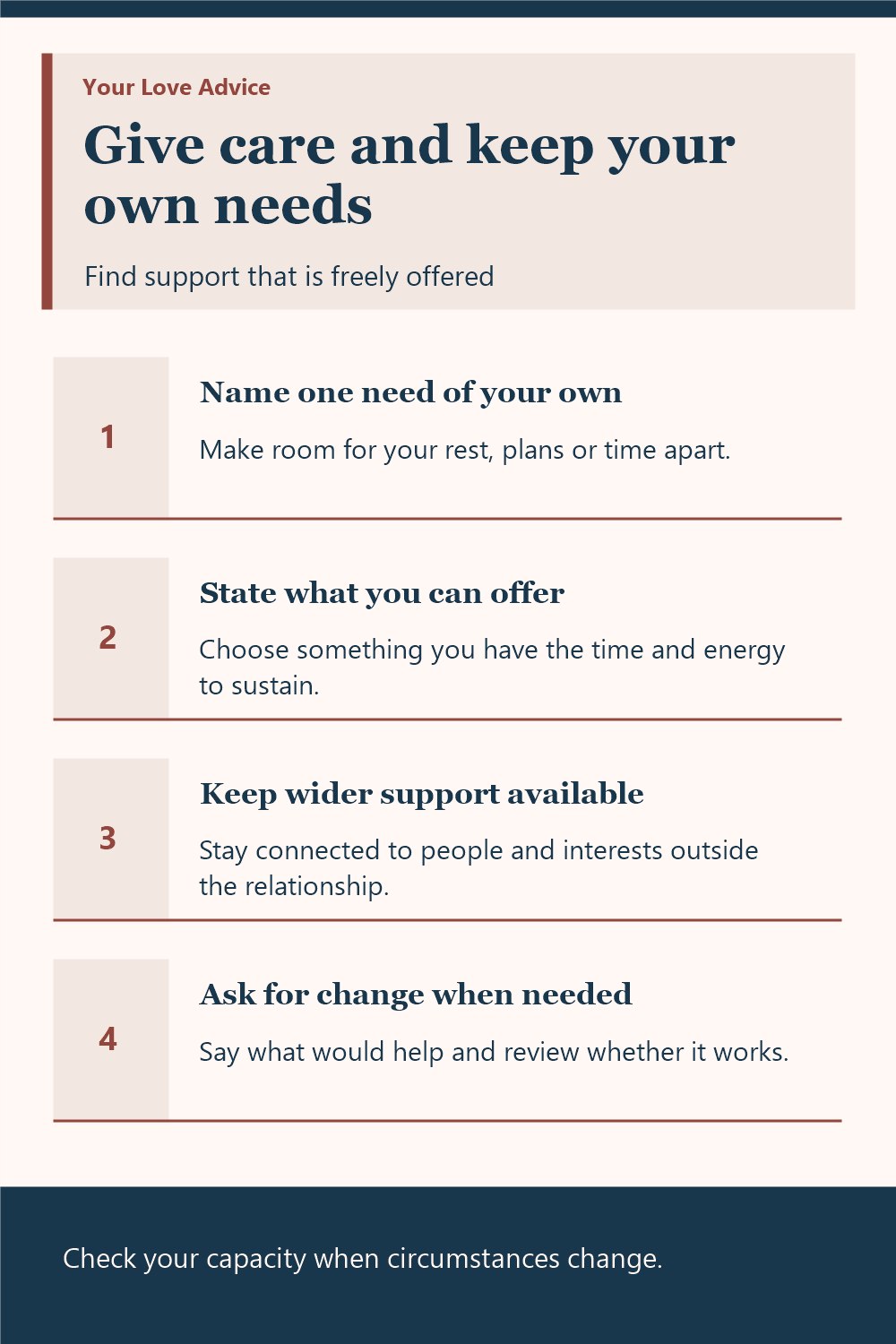
Give care and keep your own needs Find support that is freely offered
- Name one need of your own Make room for your rest, plans or time apart.
- State what you can offer Choose something you have the time and energy to sustain.
- Keep wider support available Stay connected to people and interests outside the relationship.
- Ask for change when needed Say what would help and review whether it works.
Check your capacity when circumstances change.