

After heartbreak, you may want connection and still feel uncertain about dating. Sadness, caution, curiosity or relief can all have a place in that decision. You do not need to become perfectly confident before you deserve respectful company.
Consider what you want now, what you can realistically offer and what pace feels workable. There is room to meet someone, stay with friendship or take time without dating. Your choice can change as you learn more about your needs.
On this page

Keep support beyond a new relationship
Notice who or what helps you feel supported in ordinary life. A friend, a familiar activity or suitable professional support can offer something different from dating. One new person does not have to become your only source of company or reassurance.
You can ask for practical help or a listening conversation without telling everyone the full story of the breakup. Choose people who respect what you want to keep private and explain the kind of support you would find useful.
Consider readiness without setting a perfect-healing deadline
Ask whether you want to meet this person and whether you have room for the connection being offered. You may still have feelings about a previous relationship. Consider how those feelings affect your choices instead of assuming that their presence makes dating impossible.
Relate’s discussion of rebound relationships considers risks without treating every relationship after a breakup as destined to fail. It invites reflection on what you feel and want. Those questions can be more useful than a fixed rule about how long everyone should wait.
If you mainly want to make an ex jealous or avoid a decision about the earlier relationship, give that intention some attention. Another person deserves to understand what you can offer, and you deserve space to work out what you actually want.
Choose what to share and when
You can say that you are taking dating slowly without giving a complete history of a painful relationship. Share information that affects the current arrangement, while keeping details you are not ready or willing to discuss private.
For example: “I would like to see you again, and I need a manageable pace.” The other person can say whether that works for them. You do not have to disclose more as a price of being taken seriously.
Ask about communication preferences without gender assumptions
People differ in how they like to talk, listen and make plans. Ask whether a short call, a written message or a conversation at a particular time would help. You cannot tell what someone needs from their gender alone.
Try a specific request when something is unclear: “Could we confirm the plan the day before?” Listen to what the person can realistically do and consider whether it fits your needs. A workable agreement matters more than finding perfect words.
Give an important difference a specific conversation
Different backgrounds or beliefs do not tell you by themselves whether a relationship will work. Discuss the actual choices that matter, such as holidays, family involvement, children or the kind of commitment you want. Make room for each person to explain what is important to them.
You might find an arrangement you both choose, or discover a difference you cannot accommodate. You can decline a relationship without making someone’s identity or beliefs a fault. Respect also includes accepting a clear answer from the other person.
Make room for difficult feelings without handing over responsibility
A new experience may remind you of an older hurt. Pause to describe what happened now, what it brought up and what you need. A delayed reply, for instance, may leave you anxious without proving that the current person is treating you like your ex did.
You can ask for reassurance and still recognise that another person has limits. If distress is persistent or making daily life difficult, consider qualified support for your circumstances. A new relationship does not have to carry every part of recovery.
Keep your values and present observations in view
Name a few qualities you want to experience, such as reliable plans, kindness during disagreement or room for independent interests. Notice how you are treated across ordinary situations rather than comparing every detail with the previous relationship.
You can appreciate a difference without assuming it guarantees safety or compatibility. Take time to learn about the person in front of you, and be willing to revise your impression when new information matters.
Make plans that fit your circumstances
Work, health, money, parenting and travel can affect what dating looks like. Choose an invitation that leaves room for your actual time and energy. A short meeting you both want may be more useful than a large plan that feels difficult to sustain.
Be clear about arrangements that affect each other, including how a plan will be confirmed or cancelled. You do not need to apologise for having responsibilities or pretend to be available whenever the other person asks.
Review the connection you are choosing now
After spending time together, ask whether you feel respected, able to state a preference and interested in continuing. Is the pace workable? Can both people discuss what they want? Use what you experience to guide the next choice.
You may continue, change an agreement or decide to stop dating. If you feel frightened, controlled or threatened, seek individual specialist support about safer options. Affection does not create a duty to keep trying.
Finding connection after heartbreak does not have to become a race to restore a particular future. Give attention to the next step you want and the life you are living alongside it.
Read the infographic in text
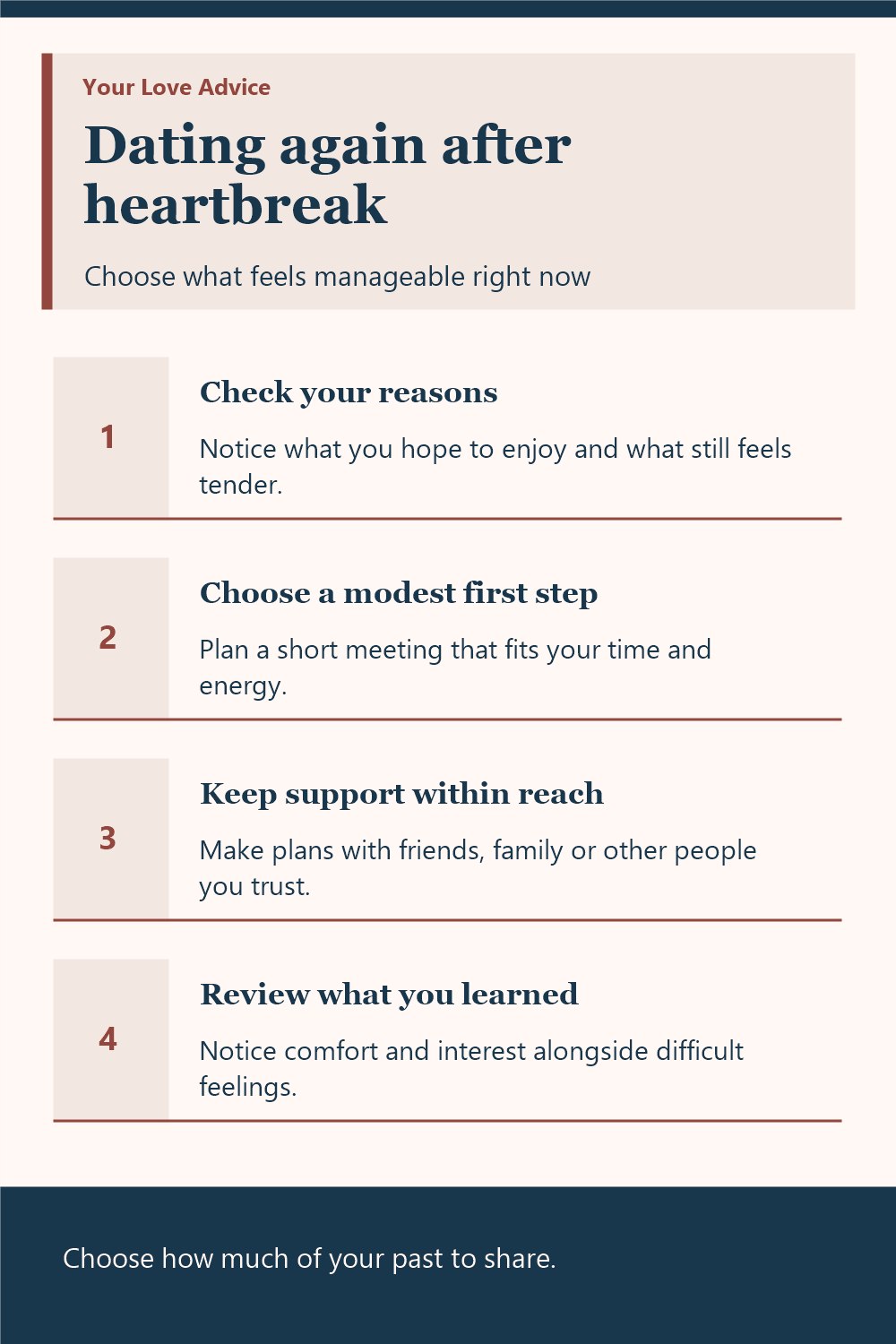
Dating again after heartbreak Choose what feels manageable right now
- Check your reasons Notice what you hope to enjoy and what still feels tender.
- Choose a modest first step Plan a short meeting that fits your time and energy.
- Keep support within reach Make plans with friends, family or other people you trust.
- Review what you learned Notice comfort and interest alongside difficult feelings.
Choose how much of your past to share.