

Enjoying someone’s company can be a good reason to keep getting to know them. It can also help to notice how you discuss needs, handle differences and treat each other in ordinary moments. These questions give you concrete subjects for that conversation.
You do not need to decide that a person is perfect or predict whether they will stay forever. Consider the relationship each of you is choosing now, with room for affection, privacy and an honest answer when something is difficult.
On this page
- 1. Can you be yourself?
- 2. Is care respectful on difficult days?
- 3. Can you discuss intentions honestly?
- 4. Can a disagreement include a pause?
- 5. Are introductions freely chosen?
- 6. What shared time feels good?
- 7. How do you share practical care?
- 8. Does trust leave room for privacy?
- 9. Which gestures feel welcome?
- 10. Can feelings change without disrespect?
1. Can you be yourself without being belittled?
Notice whether there is room for your humour, interests, ways of communicating and ordinary uncertainty. You can feel shy, need time to answer or enjoy different things from the other person. Respect should not depend on performing a version of yourself that feels exhausting.
Ask what happens when you express a preference or make a small mistake. A caring response can include curiosity, patience or a straightforward correction. Repeated humiliation or jokes that continue after you ask them to stop deserve attention.
2. Is care respectful when a day is difficult?
People can have pain, tiredness, health needs or a day when company feels harder. Ask what would help and what each person can realistically offer. You do not have to treat support as a dramatic test of love.
Menstruation, disability or a change in mood does not make someone a burden or predict whether a partner will stay. Look at specific actions: is a request heard, is a limit respected and can needs be discussed without shame? Each person can have boundaries while being considerate.
3. Can you discuss intentions honestly?
Ask what the person wants from dating and share your own wishes. A relaxed afternoon together does not automatically answer whether either of you wants exclusivity, a long-term partnership or something casual.
Listen for what is offered now and notice follow-through over time. You can enjoy affection while deciding that a difference in an important wish needs more discussion. You do not need to find hidden proof of commitment in every gesture.
4. Can a disagreement include a respectful pause?
Being kept awake until an argument is settled is not a requirement of care. Someone may need sleep, a break or a different way to communicate. When the situation is safe, discuss how to pause and when you can return to the concern.
A pause should leave room for the issue to be heard later. If a concern is repeatedly dismissed, name that pattern. If a disagreement involves threats, intimidation or fear, seek individual specialist support rather than relying on an ordinary communication exercise.
5. Are introductions a choice you make together?
Meeting friends or family can be meaningful, but the timing does not establish how good a partner someone is. Family circumstances, privacy, distance and comfort may all affect an invitation.
Ask whether an introduction is welcome and explain what the occasion involves. Neither person should have to attend a gathering to prove affection. You can discuss the meaning of the step without requiring the same pace from everyone you have dated.
6. What shared time actually feels good to both of you?
A meal, a game, a walk or a quiet evening may be enjoyable when both people want it. Ask which activities each person likes and whether there is room to suggest something different. You do not have to share every hobby.
Ordinary or less exciting periods do not by themselves define the relationship. Consider whether you can make plans, feel included and speak about what you would like more of. Constant excitement is not something either person can promise.
7. How do you share practical care?
Cooking can be a thoughtful contribution, as can planning an outing, helping with an agreed task or remembering a particular need. Look at the care available in your actual circumstances rather than assigning tasks or praise by gender.
Ask for what would be useful and acknowledge what you can offer. A favour does not create an entitlement to sex, commitment or unlimited availability. Both people can appreciate support while explaining their own limits.
8. Does trust leave room for privacy and independence?
Talk about agreements that affect each other and take a broken commitment seriously. Trust can include honest discussion and reliable action without requiring access to every message, account or past experience.
1800RESPECT’s healthy relationship guide describes respect, safety, personal choices and freedom from control. You can keep friendships, interests and beliefs while choosing a partnership. A concern should be something you can raise without being frightened.
9. Which affectionate gestures feel welcome?
Ask what the other person enjoys rather than assuming one form of affection suits everyone. A message, practical help, a compliment or time together can be meaningful when freely offered and wanted.
The person receiving a gesture can decline it or ask for something different. You can appreciate effort without accepting unwanted touch or a plan that does not work for you. Consider whether care makes room for both people’s preferences.
10. Can feelings change while respect remains?
No one has the same energy, expression or mood in every setting. You do not need to diagnose someone because they are quieter one day or more animated with friends. Focus on how they act toward you and whether relevant concerns can be discussed.
Over time, ask whether the relationship gives both people room to be honest, make choices and take responsibility for hurtful actions. You might keep getting to know each other, adjust an agreement or decide that the partnership does not fit. Your answer can be based on lived interactions rather than a promise about forever.
Read the infographic in text
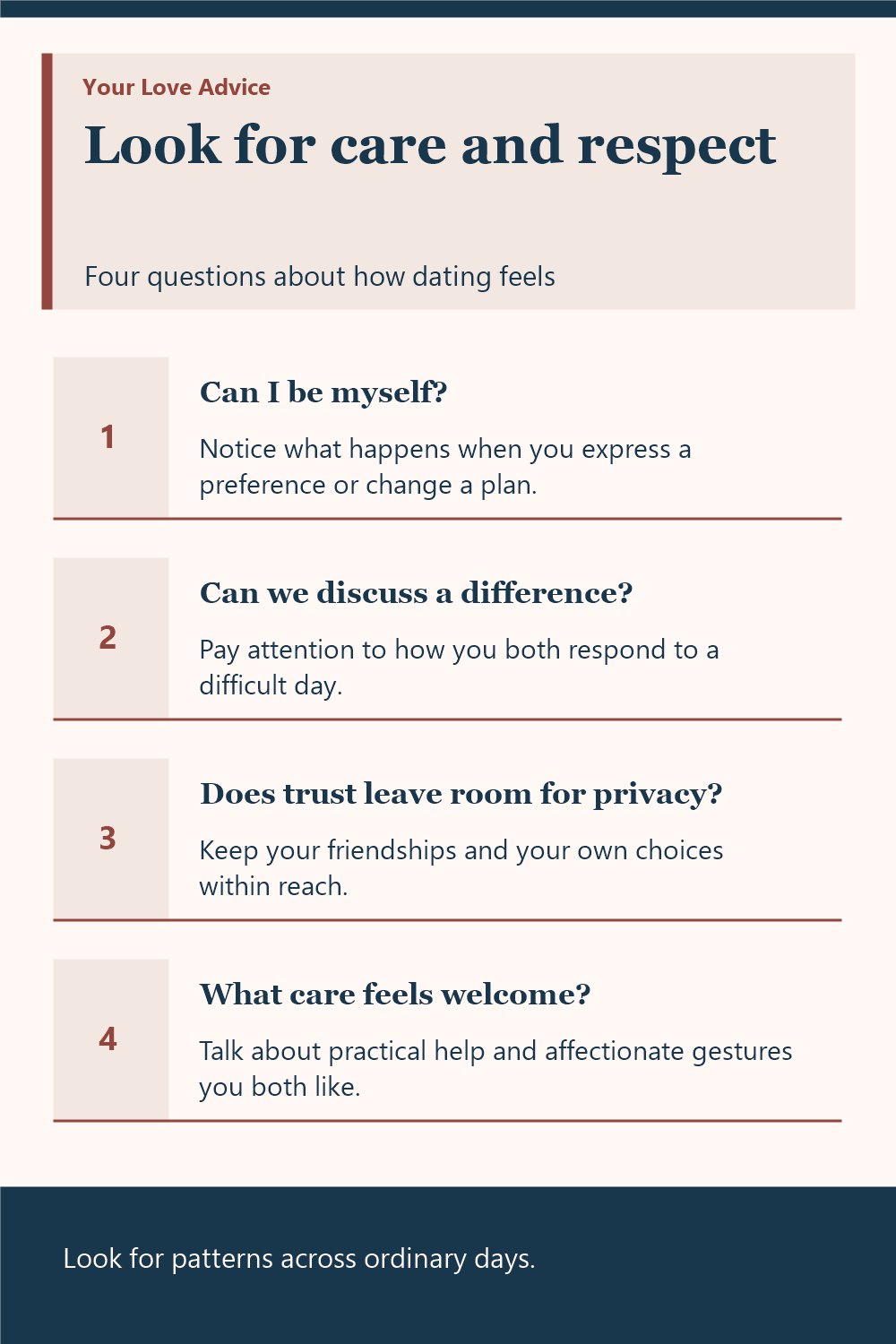
Look for care and respect Four questions about how dating feels
- Can I be myself? Notice what happens when you express a preference or change a plan.
- Can we discuss a difference? Pay attention to how you both respond to a difficult day.
- Does trust leave room for privacy? Keep your friendships and your own choices within reach.
- What care feels welcome? Talk about practical help and affectionate gestures you both like.
Look for patterns across ordinary days.