

Commitment becomes clearer when you talk about the relationship you are choosing and the ways you care for each other. Time together, a shared account or saying “we” may feel meaningful, but those things do not explain every agreement between you.
Use these thirteen conversations to explore what works and what needs attention. You can be committed while having privacy, separate interests and different preferences. Start with the subject that affects your life now rather than trying to complete the whole list at once.
On this page
- 1. Define commitment
- 2. Make room for friendship
- 3. Respect limits
- 4. Discuss communication
- 5. Keep honesty and privacy
- 6. Plan shared time
- 7. Ask what feels caring
- 8. Offer realistic support
- 9. Make fair compromises
- 10. Support responsibility
- 11. Talk about the future
- 12. Share relevant decisions
- 13. Agree about exclusivity
1. Say what commitment means now
Ask what each of you wants from this partnership. Dating exclusively, sharing a home and planning marriage are different decisions. A useful opening is, “What are we agreeing to now, and what would need another conversation?” Let the answer be specific enough to guide your choices.

2. Make room for friendship and wider support
Enjoying each other’s company can be part of your connection without requiring either person to be the other’s only confidant. Talk about what you like doing together and keep room for friends, family or other trusted support. You can share closeness without having to share every interest.
3. Respect a clear limit
Discuss preferences about touch, visits, private information and time alone. A limit matters even when the other person feels disappointed. You might agree to ask before inviting guests or posting a photograph. Revisit arrangements when circumstances change, while leaving each person free to decline something they do not want.
4. Set workable communication expectations
Talk about the contact you can realistically maintain. A daily call may work for some schedules and be difficult for others. Ask how to handle changed plans or a conversation that needs more time. You can be honest about a concern while choosing a calmer moment or a different format.
5. Be honest while keeping privacy
Share information that affects agreements and shared choices. Privacy still has a place: a friend’s confidence, a private journal or a past experience you do not wish to discuss does not automatically belong to your partner. Trust does not require passwords, location monitoring or access to every message.
Love is respect’s overview of healthy relationships includes communication, boundaries, mutual respect, support, space and privacy. Those qualities can guide a conversation without becoming a score that decides your relationship for you.
6. Make shared time realistic
Plan time that fits work, health, parenting, travel and rest. A short meal together may be more workable than an ambitious weekend. If plans keep falling through, discuss the pattern and whether a different arrangement is possible. Commitment should leave both people able to describe what they can offer.
7. Ask what feels caring
A practical favour, affectionate words or quiet company may mean different things to each of you. Ask what would feel welcome rather than assigning a fixed “love language” and expecting it to explain every need. You can appreciate someone’s effort and still ask for a change.
8. Offer support within your capacity
Be clear about the help available: a lift, a listening conversation or taking on a particular task. Ask what would actually help before taking over. Each person can have limits, and one partner may need support from several sources. You do not have to promise constant availability to show care.
9. Make compromises freely and fairly
Name the actual choice, whose needs it affects and what each person can accept. Alternating plans may help with one disagreement; another may need a different solution. A compromise should not require unwanted sex, isolation from friends or accepting intimidation. Notice whether the same person repeatedly gives up what matters to them.
10. Support responsibility and repair
You can care about your partner while asking them to acknowledge a hurtful action. Discuss what repair would look like and what needs to change. Supporting someone does not require defending everything they do. An apology can begin a conversation; trust and forgiveness remain personal choices.
11. Discuss plans that matter
Talk about wishes that could shape your future, such as location, children, work or the kind of partnership you want. You can explore a shared plan while keeping individual goals. If important wishes differ, give that difference attention rather than assuming affection will settle it later.
12. Separate shared and personal decisions
Consult each other about choices that affect shared responsibilities, time or resources. Personal decisions also deserve room. A partner can offer an opinion without becoming the authority over your friendships, clothing or interests. Ask which decisions need agreement and which simply need information or consideration.
13. Agree about exclusivity and sexual boundaries
Say what exclusivity means to you instead of relying on assumptions about flirting, dating or sexual contact with others. Be honest when an agreement changes or has been broken. Commitment also leaves room to decline affection or sex within the relationship. Consent and a relationship label answer different questions.
Choose one conversation and one practical next step. Review whether the arrangement feels respectful and whether both people follow through. You can value a relationship while deciding that a particular agreement, repeated pattern or future plan does not fit your needs.
Read the infographic in text
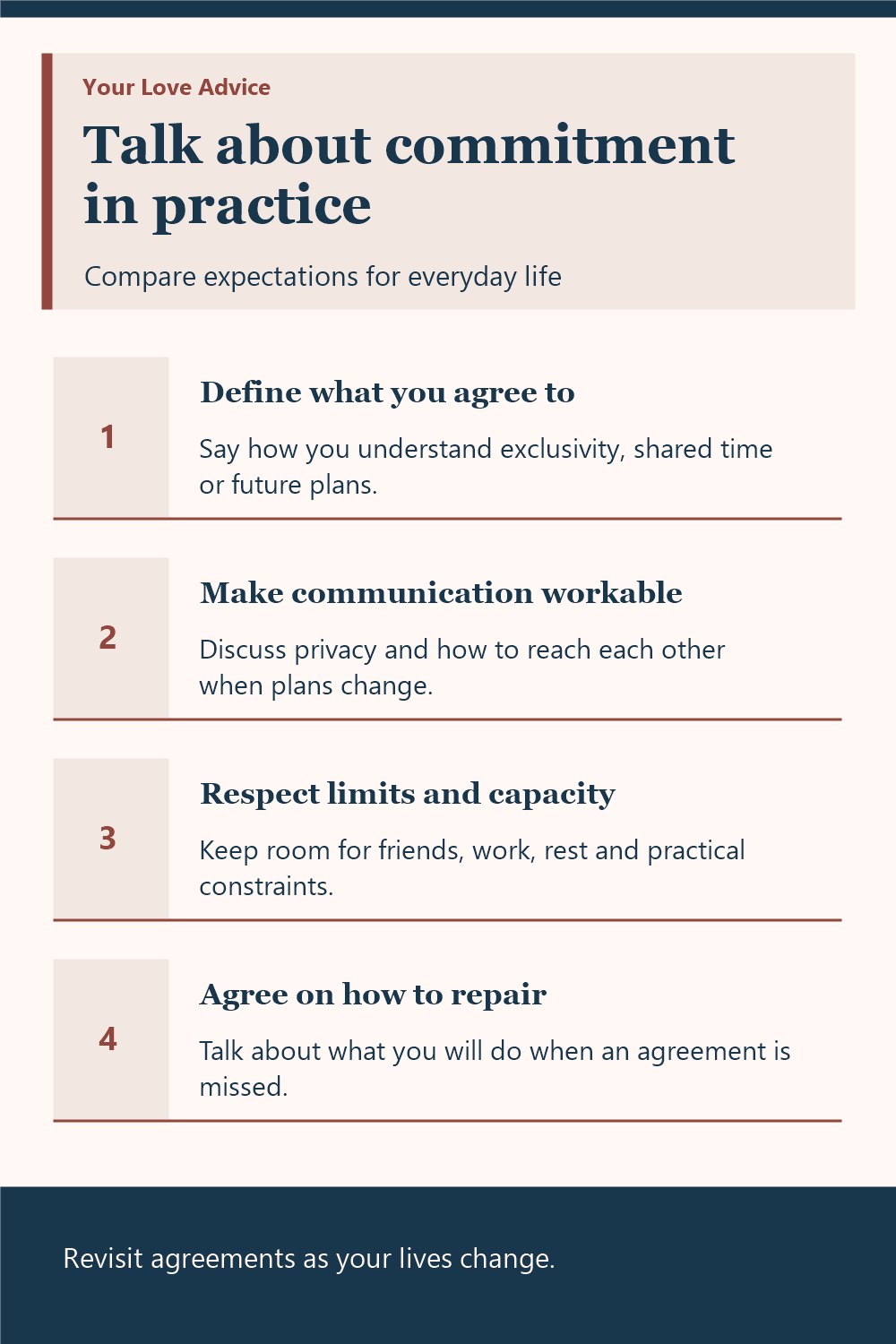
Talk about commitment in practice Compare expectations for everyday life
- Define what you agree to Say how you understand exclusivity, shared time or future plans.
- Make communication workable Discuss privacy and how to reach each other when plans change.
- Respect limits and capacity Keep room for friends, work, rest and practical constraints.
- Agree on how to repair Talk about what you will do when an agreement is missed.
Revisit agreements as your lives change.