

Wanting a lasting relationship can bring hope and frustration, especially when the connections you meet do not fit what you want. Being single does not establish that something is wrong with you, that you are sending out the wrong energy or that you must become a different person before you deserve care.
If ideas such as soulmates, intentions or spiritual energy are meaningful to you, you can use them for personal reflection. They cannot decide another person’s feelings or promise when a relationship will begin. These four practices connect hope with choices you can make.
On this page
Give the past some space without forcing yourself to erase it
A past relationship may still affect what you want, fear or notice. You do not need to remove every difficult feeling before meeting someone new. Consider which part needs attention now: a practical loose end, a boundary, grief or support with a recurring worry.
If private writing helps, try a few unsent lines about what you miss, what you do not want to repeat and what you need to protect. You do not have to send the message, contact an ex or burn a letter. Stop if the exercise leaves you overwhelmed or stuck in repeated analysis.
Spiritual practices can remain optional and personal. A prayer, a quiet pause or putting a notebook away may mark an intention for you; none guarantees that a particular person will arrive.
You can also choose a practical next step instead of a reflection exercise. Returning a belonging, changing a contact arrangement or spending time with a trusted friend may be more useful today.
Leave room for mutual interest rather than waiting for one person
You may have strong feelings for someone who does not want the same relationship. Respect their answer and consider what contact is workable. Another person’s no is not a test of how determined, positive or spiritually aligned you can be.
If you are caught between hope and a clear answer, this guide to unrequited love and personal boundaries offers ways to care for yourself without trying to change their mind.
Being open to other connections does not require accepting dates you do not want or treating everyone as a possible partner. You can get to know people at a manageable pace while keeping room for friendships, interests and rest.
Choose opportunities you would value even if no romance develops. A shared activity can offer company and enjoyment without becoming an assignment to find “the one.”
Turn a list of qualities into useful conversations
Think about the relationship you want to participate in. Kindness or reliability may matter, but ask what those words mean in daily life. You might value being able to disagree respectfully, make plans together or keep independent friendships.
Separate needs that shape a workable relationship from preferences you may be flexible about. You do not need an identical set of hobbies or an exact imagined appearance to find someone appealing. Equally, you do not have to abandon a meaningful need to appear open-minded.
Use the list to prepare questions rather than judge someone against a hidden test. “What kind of relationship are you looking for?” or “How do you like to make time for dating?” can reveal a difference that attraction alone does not settle.
This guide to talking about commitment offers more ways to ask clearly and leave room for an honest answer.
Practise self-respect while allowing yourself to receive care
You do not have to achieve perfect self-love before you can love someone or be loved. Start with ordinary decisions that respect your needs: a comfortable pace, a spending limit, enough rest or the freedom to decline contact that does not feel right.
Consider how you would like a partner to treat you, and where you can make that treatment part of your own life. That may mean listening to a concern, asking for help or keeping a promise to yourself. It need not involve buying anything or feeling confident every day.
If affirmations fit your beliefs, choose wording you can use without blaming yourself for an outcome. “I can look for mutual care and keep my boundaries” leaves room for action and uncertainty. Our article on using affirmations to reflect on love offers related ideas.
Choose one small step from these practices. A relationship may become part of your life, but you do not need to postpone a worthwhile present until it does.
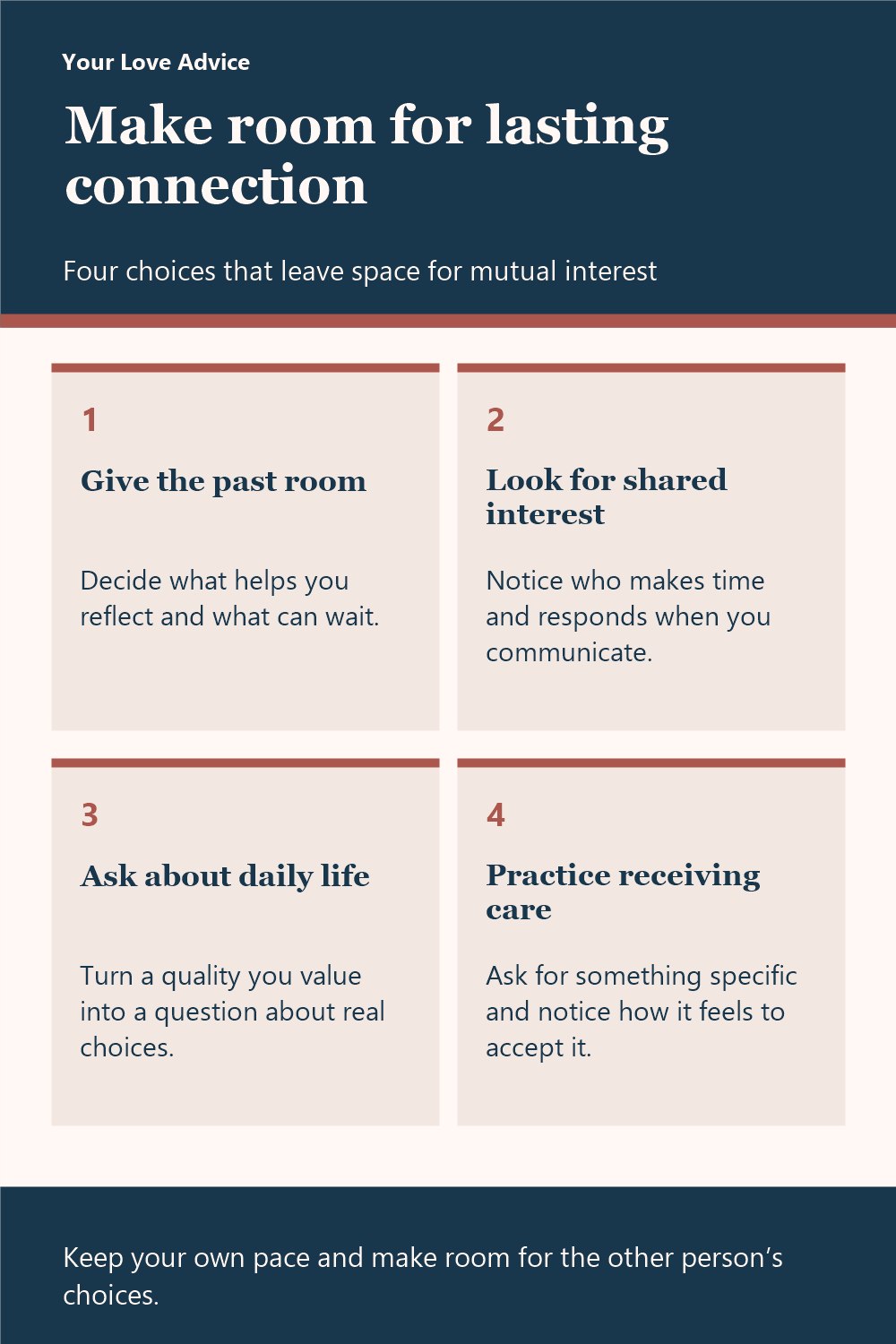
Read the infographic in text
Make room for lasting connection
- Give the past room Decide what helps you reflect and what can wait.
- Look for shared interest Notice who makes time and responds when you communicate.
- Ask about daily life Turn a quality you value into a question about real choices.
- Practice receiving care Ask for something specific and notice how it feels to accept it.
Keep your own pace and make room for the other person’s choices.