

A relationship can include affection, comfort and the wish to keep choosing each other. Those feelings do not remove the need for everyday care or give either person control over the other’s choices.
Instead of trying to guarantee that you will always feel intensely in love, look at how you treat each other now. These practices offer ways to discuss closeness when both people want to participate.
On this page
- Make care a shared conversation
- Ask what affection is welcome
- Share the practical work of everyday life
- Show respect in ordinary moments
- Treat repair and forgiveness as different choices
- Keep invitations to closeness free of pressure
- Protect the relationship without restricting each other’s lives
- Reconnect at a pace you both want
- Discuss a problem without making one person manage everything
Make care a shared conversation
Ask what helps each of you feel cared for and what has become difficult. Choose one manageable change rather than asking a partner to prove their love through unlimited effort.
Both people need room to make requests, say no and take responsibility. You can improve how you contribute, but you cannot supply the whole relationship alone. If the wish to continue is no longer shared, an honest conversation is more useful than treating one person’s effort as a guarantee that feelings will return.
Ask what affection is welcome
A hug, a thoughtful message, time together or help with a task can mean different things to different people. Rather than assigning each other a fixed type, ask what feels welcome today.
Try “Would you like a hug, some company or time to yourself?” Leave room for a different answer than you expected. A past preference does not create ongoing permission for touch or intimacy. Being close includes respecting a refusal without making the other person responsible for managing your disappointment.
Share the practical work of everyday life
Care includes noticing what needs doing, arranging it and following through. Discuss household tasks, caring responsibilities and plans in concrete terms. Agree who owns a task instead of relying on one person to ask repeatedly.
Consider capacity, access needs and work schedules when choosing an arrangement. You can use different methods while meeting an agreed standard. This guide to different personalities and fair agreements offers examples for turning recurring friction into a practical conversation.
Show respect in ordinary moments
Listen when a partner tells you what matters, keep agreements you freely make and acknowledge the work they contribute. Appreciation is more useful when it is specific: “Thank you for changing your plans to help with that appointment.”
Respect does not mean agreeing with every opinion or providing attention whenever it is requested. You can have different interests and needs. Notice whether each person can bring an ordinary concern into the conversation without being ridiculed or dismissed.
Treat repair and forgiveness as different choices
When you cause hurt, name what you did and what you will change. “I am sorry I cancelled without telling you. Next time I will message as soon as I know” gives you an action to follow through on.
An apology does not require the other person to forgive immediately or continue the relationship. Equally, choosing forgiveness does not erase a boundary or make repeated harm acceptable. Consider the response and the pattern afterward rather than asking a caring gesture to stand in for accountability.
Keep invitations to closeness free of pressure
If flirting, a shared ritual or a small surprise is welcome, make room for it. Ask what each of you enjoys instead of assuming romance must look a particular way or involve spending money.
You can invite a quiet evening, suggest time together or send an affectionate message. Let the invitation remain optional. Neither the length of a relationship nor a thoughtful gesture entitles someone to affection, sex or a particular response. Warmth works best when both people can participate freely.
Protect the relationship without restricting each other’s lives
Discuss the behaviour that concerns you rather than forbidding whole categories of friends. A conversation about an agreement being broken differs from demanding that a partner give up privacy, friendships or independent interests.
Loveisrespect’s guide to personal and digital boundaries includes questions about time, touch and privacy. Use those questions to understand what you each need, while keeping room for separate choices. Concern about the relationship should not become permission to monitor or isolate someone.
Reconnect at a pace you both want
After a busy or difficult period, ask what connection would feel manageable. You might choose a short check-in, make a plan for time together or explain that you need rest before a longer conversation.
A pause is clearer when both people understand what it means and when you intend to return to the discussion, if you both want to. Keep the agreement realistic. Closeness can include giving each other space; it does not require pretending that a concern has disappeared.
Discuss a problem without making one person manage everything
Name what happened, how it affected you and what needs a decision. Listen to the reply and check what each person understands. You can disagree, correct a detail or express disappointment while avoiding insults and humiliation.
If clearer wording repeatedly meets refusal, threats or control, the problem is not simply your failure to communicate well enough. Consider support and what choices are safe for you. For practical ideas about shared responsibility and conversation, read our guide to everyday relationship care.
Useful care leaves both people with a voice and a choice.
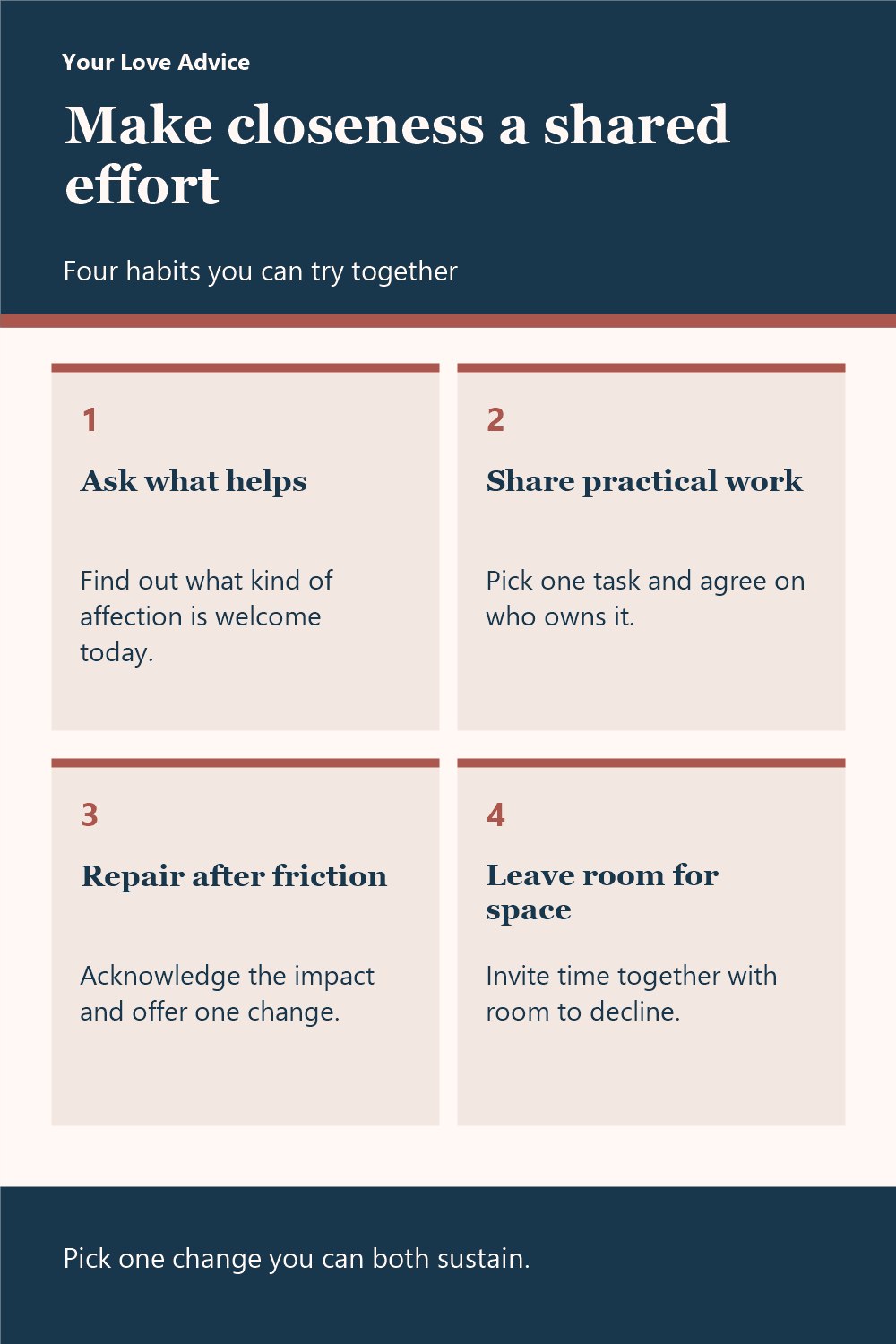
Read the infographic in text
Make closeness a shared effort Four habits you can try together
- Ask what helps Find out what kind of affection is welcome today.
- Share practical work Pick one task and agree on who owns it.
- Repair after friction Acknowledge the impact and offer one change.
- Leave room for space Invite time together with room to decline.
Pick one change you can both sustain.