

If you are an adult man hoping to meet adult women through online dating, start with what kind of connection you want and what time you can realistically give it. A dating profile can introduce you to people who choose to be there; it cannot guarantee a match, a reply or a relationship.
Treat each profile as a person’s introduction, with their own wishes and boundaries. The aim is to find mutual interest while protecting both people’s privacy and freedom to decide.
On this page
- Check the platform before creating a profile
- Write an honest introduction that gives someone a place to start
- Use preferences to look for a workable fit
- Send a thoughtful message and leave room for an answer
- Respect a no, a pause or a lack of response
- Keep privacy and scam concerns part of the conversation
- Meet only when both people freely want to
Check the platform before creating a profile
Read the current terms, pricing and privacy information of any service you are considering. Check whether the features you want—such as messaging or privacy controls—are included, limited or paid. Do not assume that every part of online dating is free.
Look for clear ways to report a problem, block contact and control what you share. The eSafety Commissioner’s online-dating guide offers questions about these features and explains why a verified photo does not by itself verify someone’s identity.
Choose a service you can use comfortably rather than joining several at once. You can review the decision after you understand how the features work.
Write an honest introduction that gives someone a place to start
Use recent photos that represent you accurately and share a few interests or ordinary parts of your life you would enjoy discussing. Describe the kind of relationship you are looking for without promising a future to someone you have not met.
A useful detail is more inviting than a demand. “I enjoy weekend walks and cooking for friends” gives someone a possible topic. A list of requirements about how a woman must look or behave can leave little room for getting to know an actual person.
Keep sensitive information out of a public profile, including an exact home address, workplace details and information about children. You can be truthful without making every part of your life publicly accessible.
Use preferences to look for a workable fit
Filters such as age range, approximate area or relationship intentions may help you find people with compatible wishes. Read what someone says about what they want instead of relying only on a photograph.
Living nearby does not mean a person is available, interested or obliged to meet. Respect the location information they choose to share; do not try to identify a home, workplace or routine from background details in pictures.
You can have preferences and still remain curious. Ask what matters for a workable relationship rather than treating a profile as an order that another person must fulfil.
Send a thoughtful message and leave room for an answer
A short message about something the person has chosen to mention is often enough to begin. For example: “You mentioned enjoying coastal walks. Do you have a favourite kind of route?” Keep the question comfortable and avoid requesting private details.
You can talk to more than one person before any agreement about exclusivity, but take time to read and respond as an individual. Sending repeated copies of a message to many people is not a substitute for a conversation.
A match or a friendly reply is permission to continue that conversation, not consent to sexual messages, personal demands or a meeting. Ask rather than assuming that interest in one form of contact means interest in every other form.
Respect a no, a pause or a lack of response
If someone says they are not interested, accept the answer. If they do not reply, leave them space rather than contacting them through another account or asking them to justify the silence.
You can feel disappointed without turning a non-response into a conclusion about all women or your own worth. It may help to spend less time checking the app and more time with activities or people you value.
Both people can change their mind. A conversation that was enjoyable last week does not create an obligation to keep dating, explain every personal reason or agree to another meeting.
Keep privacy and scam concerns part of the conversation
Take time before sharing a personal phone number, private images or information that could identify your home or routine. In-app options may let you talk while retaining more control over your contact details.
Be cautious about pressure, changing stories and requests for money or account access. Our guide to catfishing checks and privacy choices explains possible next steps without treating a single check as proof of safety.
You do not need certainty about someone’s motives before deciding to stop. If a message feels intrusive or unwelcome, consider the platform’s reporting and blocking options and any support your situation needs.
Meet only when both people freely want to
Discuss a meeting when the conversation has reached a pace both people want. Choose a public place, an arrangement you can each leave and a plan for getting home independently. Let someone you trust know your own plans where possible.
Neither person owes an immediate meeting, physical contact or a second date. Ask about preferences, respect a change of mind and keep an initial plan manageable.
This guide to online-dating pressure, privacy and scam requests offers more considerations before continuing. You can enjoy meeting people while recognising that a careful plan reduces some risks and cannot guarantee another person’s behaviour.
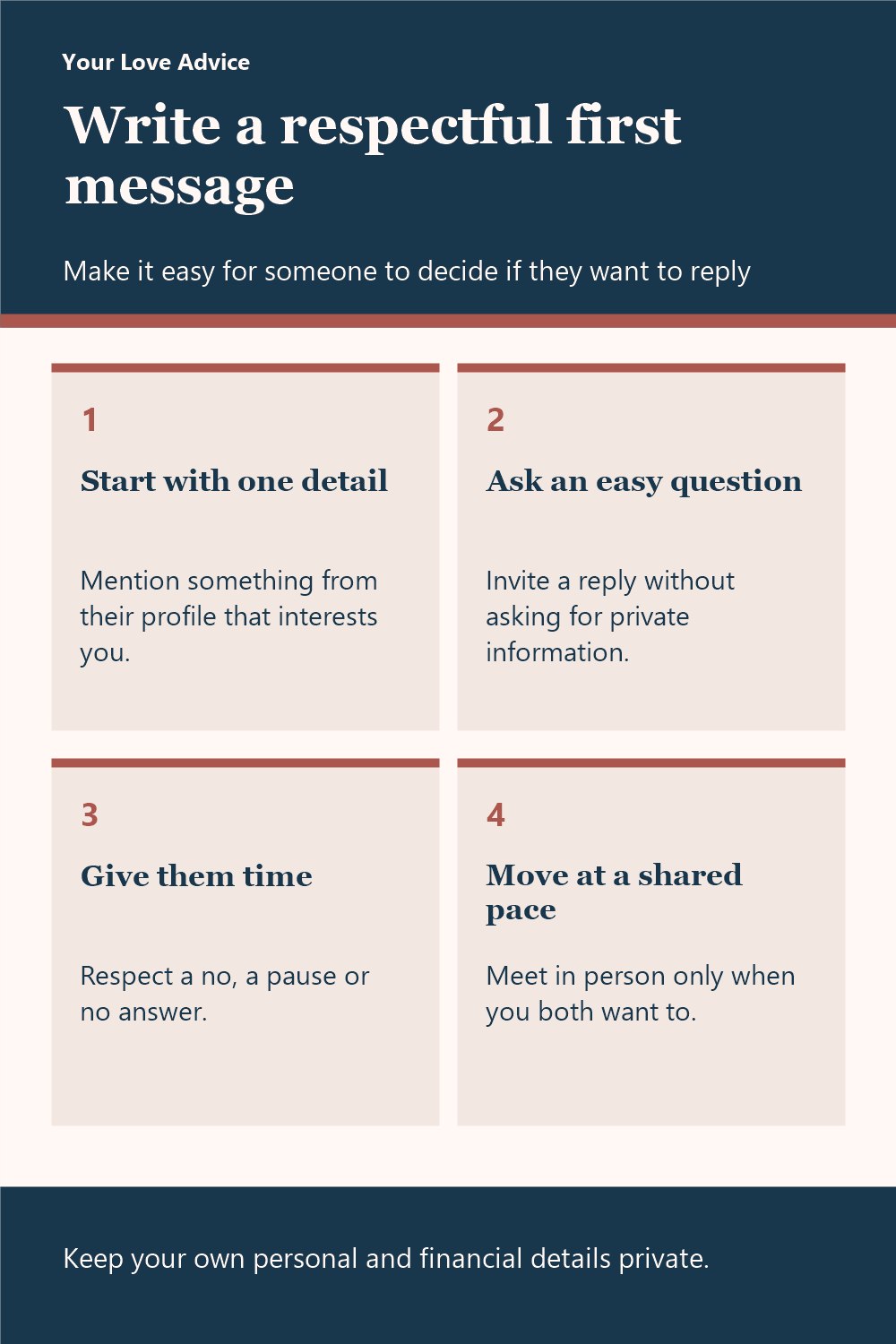
Read the infographic in text
Write a respectful first message
- Start with one detail Mention something from their profile that interests you.
- Ask an easy question Invite a reply without asking for private information.
- Give them time Respect a no, a pause or no answer.
- Move at a shared pace Meet in person only when you both want to.
Keep your own personal and financial details private.